
Slot Providers Bringing Video Game DNA to Casino Reels
By Alex╺
- PS4
- PS5
- XBox One
- Series X
- PC
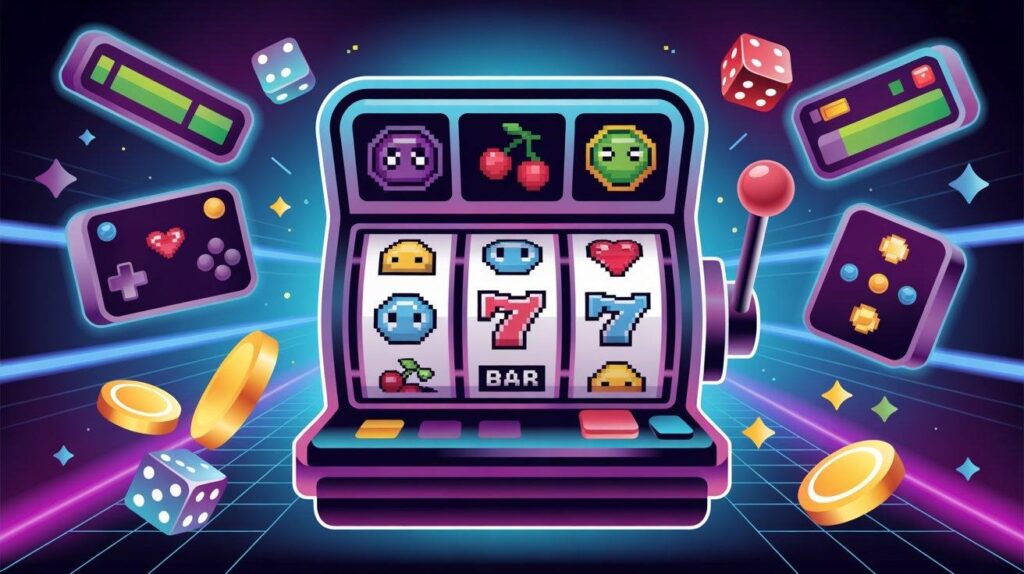
Something shifted in slot development over the past few years. The old formula still exists. Spin, match symbols, collect wins. But a new generation of providers started asking different questions.
What if slots played more like video games? What if progression mattered? What if players actually made decisions that affected outcomes?
The answers changed the industry. Studios now build slots with boss battles, character upgrades, narrative arcs, and skill-based bonus rounds.
Gamers who dismissed slots as mindless button pressing find themselves grinding for unlockables and strategizing about feature selection.
Hacksaw Gaming: Raw Chaos Energy
Hacksaw doesn’t make polished corporate slots. They make experiences that feel like someone mixed energy drinks with game design documents and let chaos drive.
Wanted Dead or Alive. Chaos Crew. Lotus Charm. These titles hit differently than traditional slots. Volatility runs extreme. Features stack on features. The visual style borrows from indie games rather than Vegas carpet patterns.
Their approach works because it respects player intelligence. No hand-holding tutorials. No slow builds. You’re thrown into mechanics that reward understanding and punish autopilot spinning. Gamers recognize this design philosophy immediately.
Nolimit City: Dark Themes, Deeper Mechanics
Nolimit City carved out territory nobody else wanted. Mental, Misery Mining, Remember Gulag. The themes go places traditional providers avoid entirely.
But the theme alone doesn’t explain their following. The mechanical innovation matters more. xWays, xNudge, xSplit. These proprietary features create dynamic reel behavior that changes across spins. The game state evolves based on what happens, similar to roguelike progression in video games.
Their slots demand attention. Zoning out means missing feature triggers. Players who engage actively gain an understanding of complex, interlocking systems.
ELK Studios: Skill Meets Chance
ELK pushed hardest on skill-based elements. Their games include decision points where player choice actually matters.
Voodoo Gold lets players select between different bonus options with varying risk profiles. Cygnus 2 includes strategic decisions during features. The player becomes a participant rather than a spectator.
This matters enormously for the gamer crossover audience. Even small choices create investment. Picking the high-risk path and watching it pay off hits differently than watching predetermined animations play out. ELK understood that agency drives engagement.
Sites with detailed slot reviews and testing break down exactly how these skill features work before you deposit anywhere.
Big Time Gaming: The Megaways Revolution
Big Time Gaming didn’t invent variable reel mechanics, but they perfected them. Megaways changed what slots could be.
Up to 117,649 ways to win on every spin. Cascading reels that chain wins together. The system creates emergent gameplay in which outcomes compound unpredictably. One spin might hit six consecutive cascades. The next might brick instantly.
The variance mimics competitive gaming. High highs. Low lows. Nothing boring in between. Players hunting big multipliers grind sessions the same way they’d grind ranked matches. Bonanza, Extra Chilli, Kingmaker. These titles launched an entire subgenre.
Push Gaming: Systems Design Thinking
Push Gaming approaches slot development like systems designers rather than gambling product managers. Fat Rabbit, Jammin’ Jars, Fire Portals. Each title introduces mechanics that interact in ways players discover over time.
Jammin’ Jars plays closer to a puzzle game than traditional slots. Symbols cluster and combine. Position matters. Watching experienced players differs completely from watching newcomers because the game rewards understanding invisible systems.
Their recent releases push further into gaming territory. Multiplier mechanics that build across sessions. Features that unlock based on play history. The line between slot and video game keeps blurring.
Pragmatic Play: Volume With Innovation
Pragmatic Play ships more titles than almost anyone else. Quantity often hurts quality. But Pragmatic found a balance where their best releases compete with boutique studios.
Gates of Olympus mainstreamed tumble mechanics for casual audiences. Sweet Bonanza proved scatter-pay systems could work at scale. Sugar Rush showed progression features could coexist with accessible design.
Their approach democratizes innovations that smaller studios pioneer. Features that start experimental become mainstream through Pragmatic’s distribution reach. Gamers benefit because proven mechanics spread faster across the ecosystem.
What Gaming Mechanics Actually Transferred?
The crossover isn’t just marketing language. Specific mechanics migrated from video games into slot design.
Progression systems. Collecting items across spins that unlock features later. Building toward something rather than hoping for random triggers.
Boss battles. Final confrontations with different rules than base gameplay. Higher stakes. Bigger potential. Actual tension.
Character selection. Picking protagonists with different abilities that affect gameplay. Meaningful choice before spinning even starts.
Achievement hunting. Hidden objectives that reward exploration. Players who dig deeper find more than surface-level button pushers.
Narrative arcs. Stories that unfold across sessions. Characters with motivations. Plot points revealed through features.
Finding These Games
The challenge becomes discovery. Thousands of slots exist. Finding the innovative ones requires filtering through the noise.
Review sites that actually test games help. Real gameplay footage shows what features actually play like versus what marketing promises. Player communities share information about which providers push boundaries versus which recycle old formulas.
Streamers popularized many of these providers. Watching someone play Hacksaw or Nolimit City for an hour teaches more than reading descriptions. The gaming community already understands learning through observation.
The Provider Tier List
Not all studios operate at the same level. A rough hierarchy based on innovation and execution:
S-Tier: Hacksaw Gaming, Nolimit City, Push Gaming. Consistently experimental. High quality across catalogs.
A-Tier: ELK Studios, Big Time Gaming, Pragmatic Play. Strong flagships with some filler between.
B-Tier: NetEnt, Play’n GO. Legacy providers with occasional standouts but mostly formulaic.
Worth Watching: Relax Gaming, Thunderkick, Iron Dog Studio. Smaller catalogs but interesting ideas.
Why This Matters?
The slot industry needed disruption. Decades of minimal innovation created products that repelled younger audiences. Why spin static reels when video games offer deeper engagement?
The new providers answered correctly. Make slots that respect player intelligence. Build systems worth understanding. Create experiences that reward attention rather than punishing it.
Gamers recognize quality because they’ve spent lifetimes evaluating it. The providers winning their attention earned it through genuine innovation rather than flashy graphics covering empty mechanics.
The convergence continues. Next generation slots will likely incorporate even more gaming DNA. Multiplayer features. Persistent progression. Competitive elements.
According to H2 Gambling Capital data, iGaming grows faster than traditional gambling precisely because of this innovation. The studios already building toward that future are the ones worth following today.
