
Poker’s Player Count Problem: Why the 2026 WSOP Numbers Should Worry Online Platforms
By Alex╺
- PS4
- PS5
- XBox One
- Series X
- PC
If you spend any time on PlayerCounter, you develop an instinct for spotting the difference between a thriving multiplayer population and a game that’s running on fumes. The number might look fine in isolation. Peak concurrent players: decent.
Daily activities: holding steady. But then you look at the weekly trend, the regional distribution, the gap between casual and hardcore sessions. And suddenly the picture shifts. The game isn’t growing. It’s concentrating.

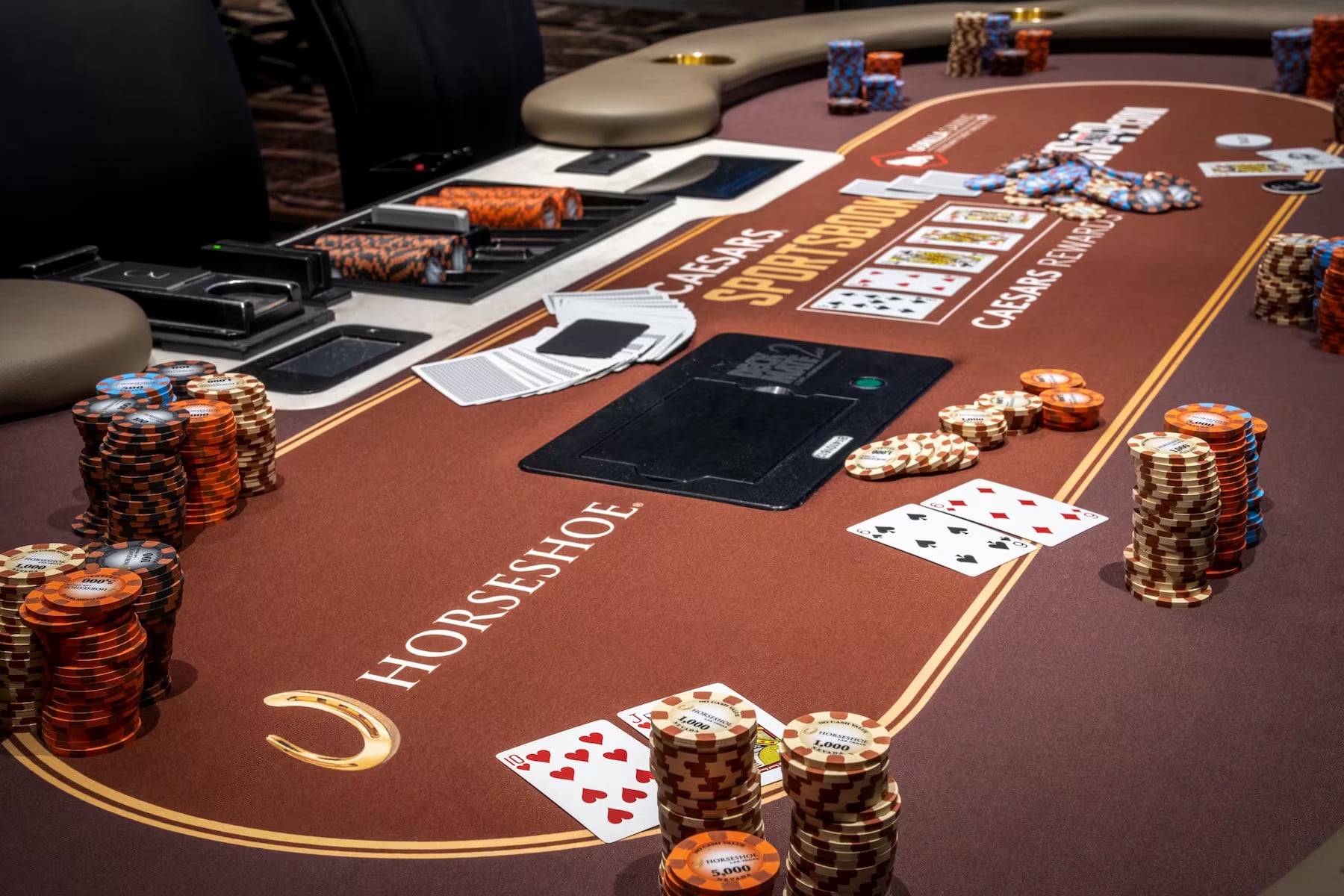
Poker is doing exactly that right now. Coverage hubs like Pokertube track field sizes, entry counts, and tournament results across the live circuit in real time, and the headline figures from the 2026 WSOP look genuinely impressive.
246,960 total entrants in 2025, $481 million in prize money, and a brand-new 25,000 sq ft Main Event arena unveiled for 2026. On paper, this is a game with a healthy server population.
Look closer, though. The numbers start to behave a lot like a game that’s winning the content war while quietly losing the casual player.
The WSOP Numbers and What They’re Actually Measuring
The 2026 WSOP opened with over 2,000 entries across just two Day 1 events. Kalshi’s prediction markets are running a live prop on whether the Main Event tops 10,000 players. The kind of milestone question PlayerCounter readers will recognise immediately as a population-health signal, not just a sports stat.
The ESPN broadcast deal, announced in March 2026 via a multi-year agreement bringing the Main Event back to ESPN this summer, guarantees mainstream visibility that poker hasn’t had since the mid-2000s boom. That’s real. That matters.
But here’s the problem. Total WSOP entries are measured across a 100-event series running from late May to mid-July. That’s not a concurrent player count.
It’s an aggregated unique visitor total across ten weeks. In video game terms, it’s the difference between daily activities and monthly uniques. And any analyst on this site knows those two numbers can tell completely opposite stories.
When you disaggregate the 2026 WSOP field sizes, the concentration becomes visible. The record-setting numbers are driven almost entirely by a handful of marquee events. The Main Event, the $1,000 No-Limit Hold’em bracelet events, the online qualifiers.
Strip those out and mid-tier live tournaments are struggling. Pokerfuse’s 2025 demographic breakdown showed U.S. participation in the Main Event dropped over 11% year-on-year. That’s not a rounding error. That’s a trend.
Online Poker Has a Retention Problem, Not an Acquisition Problem
The player count story in online poker is more complicated than the live circuit. And it maps almost perfectly onto the patterns PlayerCounter readers see in mid-life multiplayer titles.
Traffic peaks, then plateaus. New player funnels work. The WSOP’s massive visibility drives sign-ups to every major online platform in June and July.
But retention is where the wheels come off. PokerNews reported in late 2025 that Las Vegas poker tournament attendance dropped 17, 22% at major events outside the WSOP calendar. That’s the off-peak number. That’s the real baseline.
Global online poker cash-game traffic peaked in 2024 and has since retreated toward 2022 levels. Think about what that means structurally.
The WSOP generates a spike. The equivalent of a major content update or a seasonal event in a live service game. And then the population drifts back down. The spike flatters the annual number. It doesn’t mean the game is growing.
For PlayerCounter’s purposes: if poker were a game on Steam, the concurrent player chart would show a sharp June/July spike, a cliff edge in August, and a long, slowly declining baseline through the rest of the year. You’d call that a healthy game with a serious engagement problem.
Where Fragmentation Actually Comes From?
This is where it gets interesting for anyone who watches multiplayer ecosystems closely.
Poker’s fragmentation isn’t about the game itself. The rules of Texas Hold’em haven’t changed. The skill ceiling is exactly where it was. What’s changed is the distribution of players across formats. Live, online cash, online MTT, mobile, social poker, crypto poker platforms. With no single destination pulling the whole population together.
Online tournaments have partially replaced live cash games as the format casual players reach for first. Mobile apps have created a layer of players who will never sit in a live cardroom.
Platforms built around cryptocurrency. CoinPoker’s recent revamp of its real-money app is a good example. Are pulling in a different demographic entirely, one that overlaps more with DeFi users than with traditional poker grinders.
The result is a fragmented server population, in PlayerCounter terms. Healthy total numbers. Thin concurrent populations in any single format or platform.
Media hubs matter here more than most people acknowledge. In gaming, the platforms that hold fragmented communities together. Twitch, Discord, YouTube. Function as the connective tissue between the formats. Poker’s equivalent is a smaller ecosystem, but it exists.
Tournament coverage, hand histories, field-size reporting, and strategy content aggregated in one place gives distributed players a common reference point. Without it, the population doesn’t just fragment. It evaporates, one quiet Sunday at a time.
What PlayerCounter’s Methodology Would Actually Say About Poker?
Let’s run the thought experiment properly. If poker were listed on this site. And given how clearly it fits the ‘competitive multiplayer with measurable population health’ definition, it arguably should be. What would the metrics show?
- Peak concurrent players (live): roughly 50,000 during Main Event final table broadcasts. That’s a real number and it’s impressive.
- Peak concurrent players (online): maybe 30,000 across major platforms on a peak WSOP Sunday. That’s down from 2021 COVID-era highs when the live circuit was shut and everyone played online.
- Daily active baseline (online): significantly lower. Sub-10,000 on most platforms outside tournament registration windows.
- Weekly trend: flat-to-declining across the last 18 months, with seasonal spikes.
That’s not a dead game. Not even close. But it’s also not the story the 246,960 headline number tells. It’s a game with an extremely loyal core, a high-profile annual event that generates outsized media coverage, and a real problem converting spectators into consistent players.
Nielsen’s 2025 sports viewership report pointed to exactly this pattern across competitive disciplines. growing event audiences don’t automatically translate into growing participant bases.
The audience for the WSOP Main Event final table will be larger in 2026 than it was in 2016. The number of people playing poker on a Tuesday night in December probably won’t be.
The Competitive Play Boom Isn’t Lifting All Boats
2026 has been a record year for competitive gaming viewership broadly. The spectator era is breaking records across every format. Esports finals, live tournament broadcasts, streaming concurrent peaks.
Poker sits inside that trend at the big moments. The WSOP Main Event has genuine cultural weight again, partly because of the ESPN deal, partly because a generation of players who grew up watching Chris Moneymaker and Phil Ivey are now old enough to be the enthusiastic adults buying $1,000 entries.
But the competitive play boom is fundamentally a viewership story, not a participation story. Esports audiences are growing fast.
Esports player counts are growing more slowly, and in some titles plateauing. Poker is following the same curve. Spectators are up. Participants are flat or fractionally declining.
That’s not a disaster. But it is a strategic problem for every online poker platform, every affiliate, and every media hub trying to build a sustainable business on the back of poker’s audience.
FAQs
Is the 2026 WSOP actually setting records, or is the data misleading?
The aggregate figures are real. 246,960 entrants in 2025 is a genuine all-time record. The issue is that these totals are cumulative across a 100-event series, not a concurrent player figure. Disaggregated by event, mid-tier field sizes are flatter than the headline number suggests, and U.S. Participation in flagship events has dropped year-on-year.
Why do online poker platforms struggle to hold players after the WSOP spike?
The WSOP creates a natural acquisition window. Media coverage drives sign-ups across every major platform in June and July. Retention fails because recreational players don’t find a casual-friendly ecosystem waiting for them. Rake structures, table dynamics skewed toward regulars, and a lack of social features push new players out before the habit forms.
How is online poker’s player count different from live tournament attendance?
Live tournament entries are discrete, scheduled events with clear entry barriers (travel, time, buy-in). Online cash-game traffic is a baseline daily metric closer to what PlayerCounter measures. How many people are actually playing right now, on a random Tuesday. Those two numbers tell very different stories about population health.
Does the ESPN-WSOP broadcast deal change the player count trajectory?
It helps, genuinely. Mainstream visibility converts a small percentage of casual viewers into players. But broadcast deals affect awareness, not retention. And poker’s structural problem is on the retention side. The deal probably moves the baseline up slightly; it doesn’t fix the drop-off after August.
Should online poker platforms be worried, or is this normal for a mature game?
Both, honestly. Plateau-then-concentrate is a normal lifecycle for mature multiplayer games. The question is whether the casual player funnel stays wide enough to replenish the population as older players churn out. Right now, the signs point to a slowly narrowing funnel. Which matters a lot more to platforms over a five-year horizon than this summer’s WSOP field sizes.
The Honest Read on Poker’s Population Health
Poker isn’t dying. The 2026 WSOP will probably set more records, the Main Event field will likely crack 10,000, and the ESPN broadcast will put poker back in front of an audience that’s largely forgotten it existed. Those are real wins.
But PlayerCounter-style analysis strips away the flattering headline numbers and asks the harder question: what does the daily active baseline look like? What’s the week-over-week trend outside the seasonal spike? Where are the casual players going, and are they coming back?
The answers are messier than the 246,960 banner figure. And online platforms that treat the WSOP as proof their population is healthy, rather than as a temporary spike against a flat baseline, are reading the data the way a developer reads a game’s all-time peak concurrent count. Technically accurate, completely misleading about the actual state of the player base.
The platforms that survive the next five years will be the ones tracking the Tuesday numbers, not the July ones.
