
Loot Boxes and the Relapse Loop: How Modern Game Mechanics Trigger Addictive Brains
By Alex╺
- PS4
- PS5
- XBox One
- Series X
- PC
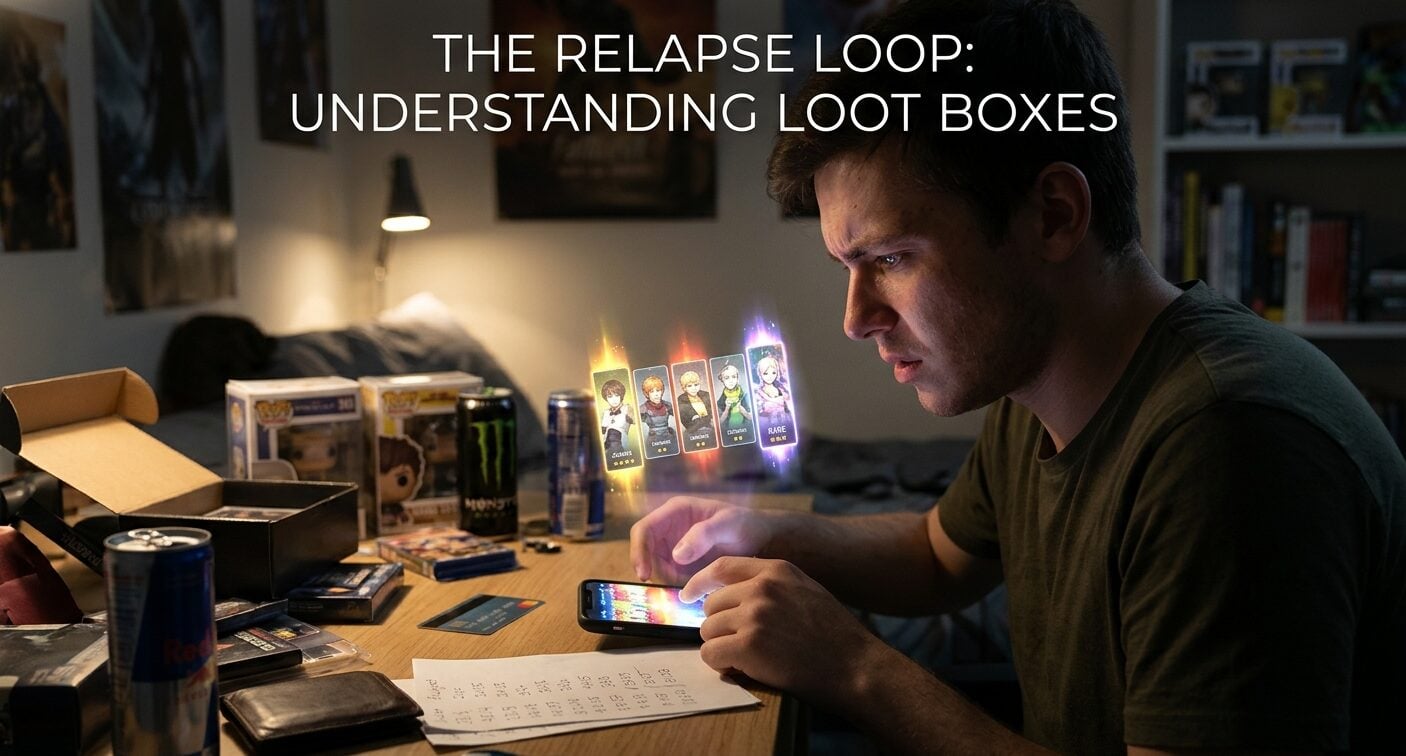
Gaming is supposed to be fun. Whether you are exploring a virtual world, competing with friends or unlocking a rare character, the satisfaction of making progress is part of what keeps players coming back. But what happens when a game stops rewarding skill and starts encouraging players to spend money chasing a random prize?
Loot boxes, gacha mechanics and battle passes have transformed how modern games make money. While these features can add excitement, some are designed to keep players engaged through unpredictable rewards, limited-time offers and the temptation to try just one more time.
For people with a history of gambling problems, impulsive behaviour or substance dependency, these mechanics can present a particular challenge.
Understanding how they work is an important first step towards protecting both your money and your recovery.
The Psychology Behind the Next Reward
Loot boxes offer players a chance to win random digital items, ranging from ordinary cosmetic upgrades to extremely rare rewards.
Gacha games use a similar system, encouraging repeated attempts to unlock characters or equipment. Battle passes take a slightly different approach, rewarding players for completing challenges over a limited period.
The psychological issue is not simply that these systems exist. It is how unpredictable rewards can encourage repeated behaviour.
When players do not know when the next valuable item will appear, each attempt carries the possibility of a breakthrough.
This is known as a variable-ratio reinforcement schedule, a principle studied in behavioural psychology. The uncertainty can make the next attempt feel especially tempting, even after several disappointing results.
A player might spend money opening ten boxes without finding the item they want, only to convince themselves that the eleventh could be different. Previous spending can then become a reason to continue rather than a warning to stop.
This is particularly concerning when games combine random rewards with flashing animations, countdowns and limited-time offers. Together, these features can make spending feel urgent and emotionally rewarding.
When Gaming Starts to Resemble Gambling?
The similarities between loot boxes and gambling are worth taking seriously, although not every in-game purchase is equivalent to a wager. Buying a specific skin at a fixed price is fundamentally different from paying for an unknown reward.
The concern lies in systems where players repeatedly spend money for a chance of receiving something valuable or desirable.
The Gambling Commission’s Young People and Gambling 2024 report found that 27% of surveyed 11–17-year-olds had paid to open loot boxes, packs or chests to obtain in-game items.
The finding demonstrates how familiar these mechanics have become among young players. It does not, by itself, prove that they develop gambling problems, but it highlights the scale of exposure.
For someone who has previously struggled with gambling, the cycle of anticipation, disappointment and renewed hope may feel uncomfortably familiar. The desire to recover money already spent, or to finally obtain a rare reward, can create a powerful incentive to continue.
The danger is that virtual rewards can feel less like purchases and more like opportunities that must not be missed.
The Connection Between Gaming Cravings and Recovery
For people recovering from substance dependency, recognising familiar patterns of compulsive behaviour can be important. Addiction does not look identical for everyone, and gaming mechanics do not automatically cause relapse. However, certain experiences may overlap.
Consider someone who has previously struggled with alcohol or drug use and is now using gaming as a healthier way to spend their time. A game built around repeated purchases, unpredictable rewards and escalating excitement may introduce a new source of intense anticipation.
The craving to open another loot box can resemble gambling urges, particularly when a player feels restless, preoccupied or unable to stop despite wanting to. Some people may recognise aspects of the urgency and discomfort they associate with drug withdrawal.
However, these experiences are not medically equivalent: an urge to open a loot box is not, by itself, evidence of withdrawal or a substance-related condition.
The practical concern is the pattern of behaviour. If gaming begins to dominate thoughts, disrupt sleep, create financial stress or undermine recovery routines, it is worth stepping back before the habit becomes harder to manage.
How to Spot Games With Predatory Mechanics?
Not every monetisation system is harmful, but players can look for warning signs before committing their time or money.
- Randomised paid rewards: You must spend money without knowing exactly what you will receive.
- Limited-time offers: Countdown timers pressure you into purchasing before an opportunity disappears.
- Sunk-cost pressure: The game encourages you to keep spending because you have already invested money or time.
- Repeated spending prompts: The game makes purchasing additional currency or opening another box almost effortless.
- Fear of missing out: Exclusive characters, rewards or seasonal items make you feel that skipping a purchase means falling behind.
Battle passes deserve consideration, too. Although they usually offer defined rewards rather than random prizes, their time-limited progression can create pressure to play regularly to avoid wasting money already spent.
The key question is whether a game respects your decision to stop or continually gives you reasons to reconsider it.
A Practical Guide to Protecting Your Recovery
If you know that compulsive spending or gambling-like behaviour could be triggering, you do not have to give up gaming altogether. The aim is to find games that support your wellbeing rather than undermine it.
Start by choosing titles where rewards come from gameplay, exploration or completing challenges, rather than paid randomisation. Look for games that allow you to purchase specific items at transparent prices.
You can also make a few practical changes:
- Disable in-game purchases or add parental-style spending restrictions to your account.
- Remove saved payment details and avoid buying virtual currency when emotions are running high.
- Uninstall games that repeatedly trigger urges to spend or keep playing.
- Set clear limits on gaming time and take breaks away from the screen.
- Tell someone you trust if you notice yourself hiding purchases, chasing losses or struggling to stop.
If gaming begins to interfere with your recovery, speaking with a counsellor, addiction specialist or trusted support service can help you identify the triggers and develop a plan.
Better Gaming Starts With Better Design
Games can offer friendship, escapism and genuine enjoyment without turning every reward into a commercial opportunity. Developers have a responsibility to consider how monetisation systems affect vulnerable players, while platforms and regulators should continue to examine whether existing protections are adequate.
Ultimately, players should not have to rely entirely on willpower to resist systems deliberately built around urgency and unpredictable rewards.
Recognising the difference between enjoyable progression and compulsive reward-seeking can help people make more informed choices.
Whether you are protecting your finances, supporting someone in recovery or simply looking for a healthier gaming experience, the principle is the same: you should be playing the game, not feeling that the game is playing you.
