
How to Choose a Safe Valorant Account for Ranked Play
By Alex╺
- PS4
- PS5
- XBox One
- Series X
- PC
Getting into Valorant’s competitive queue takes longer than most new players expect. Before you can play a single ranked match, you have to grind through unrated games, deathmatches and daily missions until your account reaches the required level.
Some players enjoy that climb. Others are returning veterans who lost access to an old login, players who want a second profile for practice, or collectors who would rather start with skins they actually like.

For all of them, picking a Valorant account is a practical decision with real consequences. A poorly chosen account can end up in the wrong region, come with no email access, or carry a history you don’t know about. A well-chosen one lets you load into competitive the same evening, with your agents unlocked and your settings ready.
This guide covers what a ranked-ready account includes, how to match one to your goals, how to check an account before you commit, and how to lock it down once it is yours. You’ll also find out what to look for in the inventory proof so the account matches its description.
What a Ranked-Ready Valorant Account Actually Gives You?
A ranked-ready Valorant account has already met Riot’s entry requirements for competitive play. In practice, this means the account has reached the level Riot requires, has no queue restrictions, and is free to start placement matches. You skip the grind and go straight to the part of the game you care about.
Many buyers start with a fresh Valorant account that has never played ranked, so its placement results reflect their own performance and not a rank someone else left behind.
Unrated matches also count for more than people assume. By the time an account becomes eligible for competitive, it has usually unlocked a few extra agents through the free contract system. That gives you more flexibility in agent select and makes it easier to fill whatever role your team needs.
Why Account Level Matters for Competitive Queue?
Riot ties ranked access to account level for a reason. The requirement filters out throwaway accounts and gives new players time to learn maps, economy and utility before their results count.
For you, the account level shows how much groundwork is already done. An account that just crossed the threshold is basically a clean slate. An account with a long match history may have hidden matchmaking data that shapes your first placement games.
If you want your placements to reflect your own skill, look for an account that is eligible for ranked but has never played it. If you’d rather start from an established rank, check the rank history carefully before committing.
Matching the Account to Your Goal
The best account depends on why you want it. A returning Diamond player, a newcomer who wants to skip the early grind and a skin collector need different things. Being clear about your goal first saves you from paying for features you won’t use or missing ones you need.
Start with region, because it is the hardest thing to change. Valorant accounts are tied to the region where they were created, and moving one is restricted.
If you play from Europe, an account registered in North America will give you high ping and long queues. Match the region to where you actually play before you look at anything else.
Smurf and Practice Accounts
Many experienced players keep a second account to try new agents or practice roles they rarely play. Learning Viper lineups or Sova recon darts on your main account can drag your rank down while you are still figuring things out. A separate practice account lets you make those mistakes without affecting the rank you’ve built.
The fair way to use a secondary account is to treat it as a learning space and not as a way to stomp lower-ranked players.
Play agents you are genuinely uncomfortable with, focus on one skill per session, and review your matches afterward. Used this way, a practice account speeds up your improvement and keeps matches fair for everyone else in the lobby.
Skin-Focused Accounts
For some players, the inventory matters as much as the rank. Premium skin lines, bundle finishers and rare melee items can take a long time to collect through the store rotation and Night Market. An account that already has the collection you want saves you from waiting for the right offer.
When you browse these accounts, focus on the specific items you care about and not the total number of skins. One weapon skin you’ll use every match is worth more than a pile of skins for guns you never buy.
How to Verify an Account Before You Commit?
Checking the account carefully protects you from most of the problems that lead to regret later. A trustworthy listing should include clear proof of what the account contains, and you should compare that proof against the description line by line.
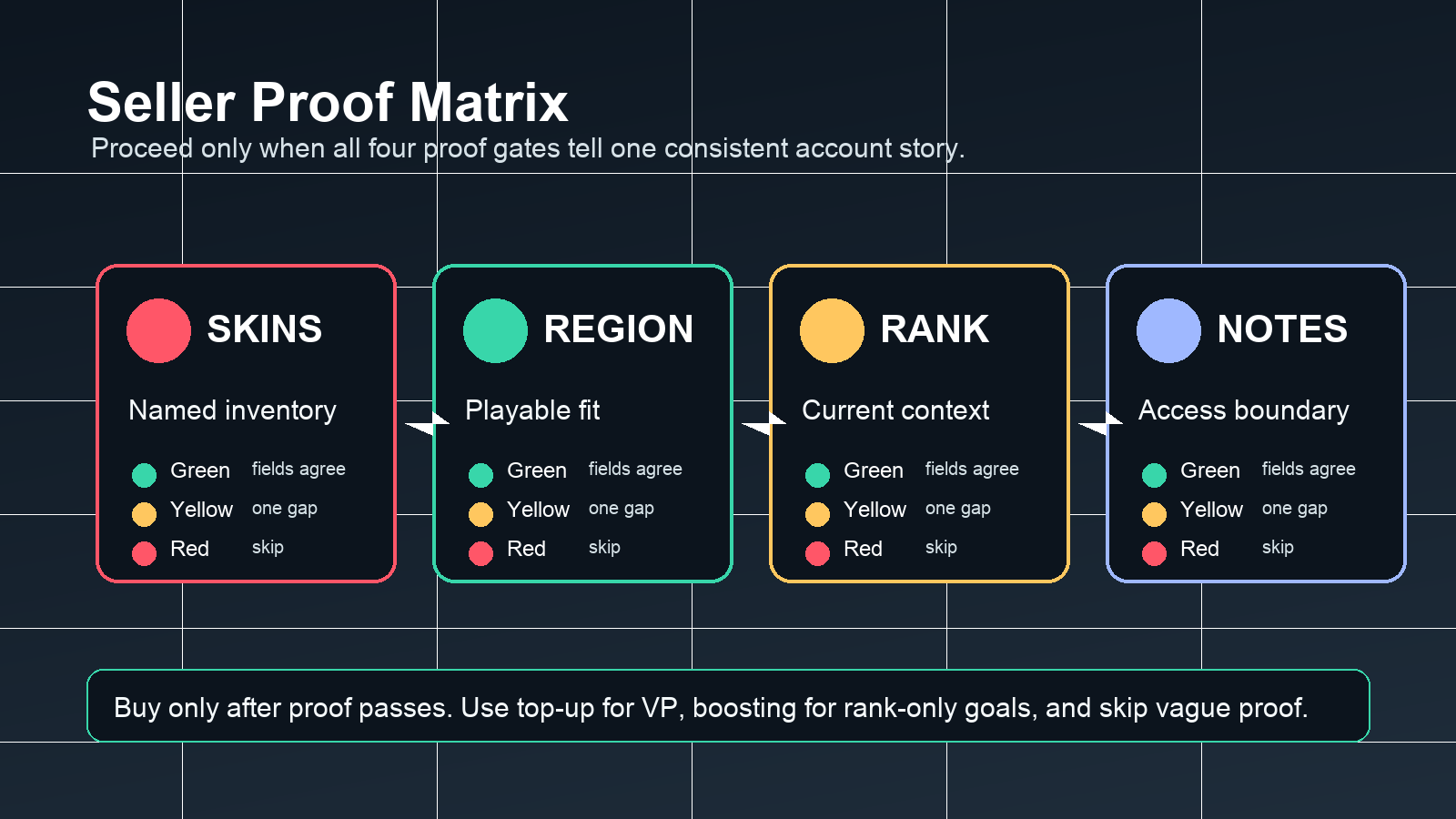
Check these points before you decide:
- Region: confirm the account’s server region matches where you play.
- Inventory proof: look for recent screenshots of the collection, agents and rank, not generic images.
- Email access: make sure the original email comes with the account so you can fully control it.
- Account status: ask whether the account has any penalties, queue restrictions or chat bans.
- Rank history: if the account has ranked games, review past acts to understand its matchmaking position.
Buying through a marketplace with buyer protection adds a layer of safety you won’t get from a private trade on a forum or Discord server.
Platforms such as U7BUY hold payment until the delivery is confirmed, so if the account doesn’t match its listing, you have a clear way to raise the issue and get it resolved.
Whichever route you choose, keep a record of the listing, the proof screenshots and every message, so you have documentation if anything is disputed.
Keep in mind that Riot’s terms of service do not support account transfers, so there is always some risk. Knowing that up front helps you make a careful decision and makes it more important to verify the account properly.
Securing the Account After Delivery
Once you have the login details, your first job is to make sure nobody else can get back in. Do this before you play a single match, because a compromised account can lose its skins or rank quickly.
Start by logging into the Riot account management page and changing the password to something long and unique that you don’t use anywhere else. Next, update the linked email to one you own, and confirm the change through the verification message Riot sends.
With the email under your control, turn on two-factor authentication so every new login needs a code sent to your inbox. This one step blocks most unauthorized access attempts.
After that, change the Riot ID and tagline to something personal so the account feels like yours in lobbies and friend lists.
Check the linked third-party connections and remove any you don’t recognize. Finally, log out of all other sessions from the security settings.
If anything looks unusual during this process, such as unexpected purchase history or an email you can’t change, contact the seller or marketplace right away while your protection window is still open.
Picking the Right Account and Keeping It Secure
Choosing a Valorant account comes down to knowing what you need and checking that the account delivers it. Decide whether you want quick ranked access, a practice space for new agents or a skin collection you’ll enjoy every match. Then confirm the region, the inventory proof, email access and the account’s status before you commit.
Your work doesn’t end at delivery. Changing the password, taking over the email, turning on two-factor authentication and clearing old sessions turn a new login into an account that is fully yours. These steps take only a few minutes and protect the time and effort you’ll put into climbing.
With a careful choice and solid security habits, you can spend less time grinding requirements and more time improving your aim, learning lineups and winning rounds. Pick the account that fits how you play and secure it right away.
