
Why 2026 is All About RNG Games
By Alex╺
- PS4
- PS5
- XBox One
- Series X
- PC
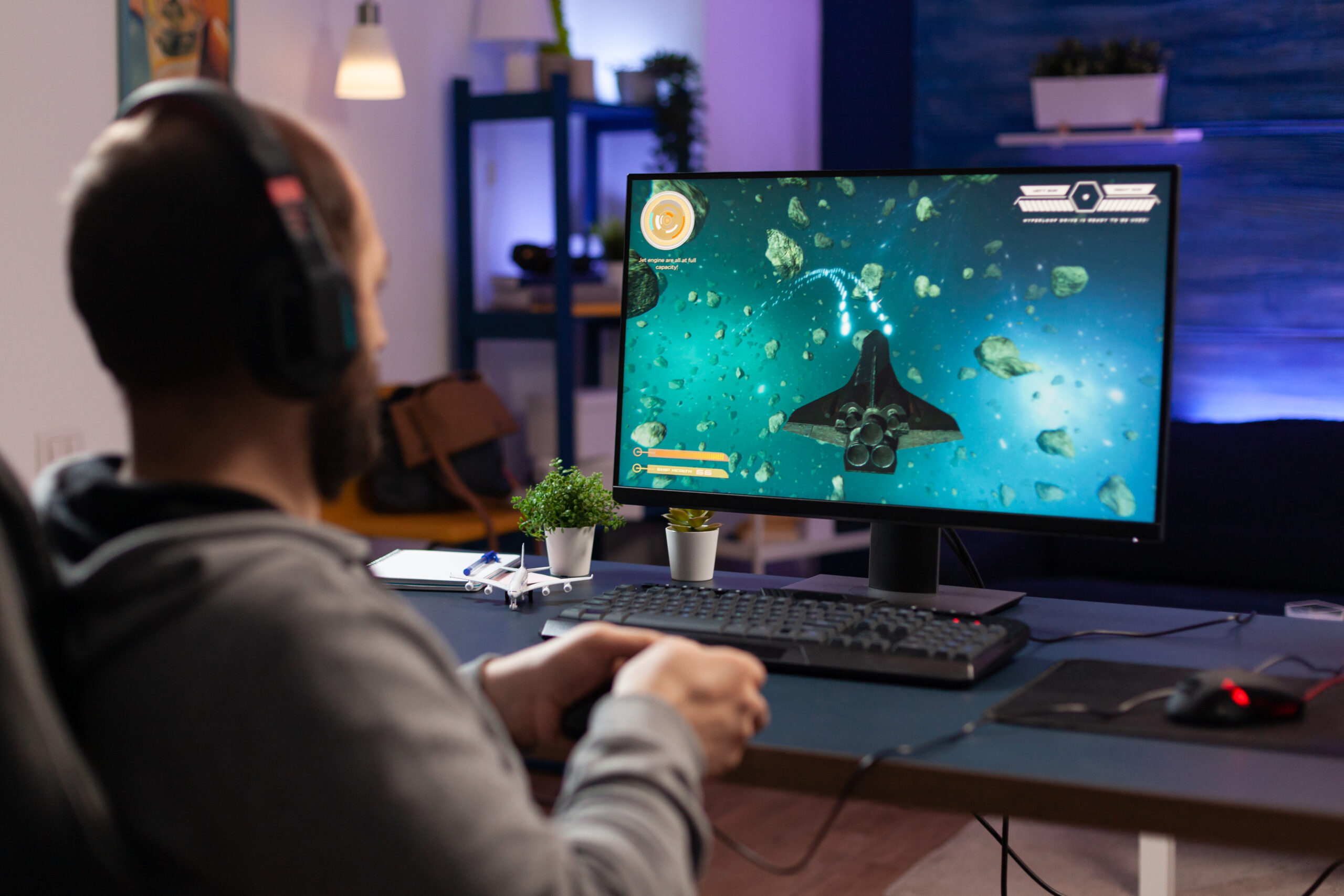
If you’ve logged into a game-creation platform recently, you might’ve noticed a new trend emerging… there are a lot of games built around randomness popping up.
From aura rolling to gacha games and character spinners, RNG (Random Number Generator) games have become quite the popular trend on user-centric creation platforms.
Rather than making everything skill-based, these games are injecting elements of chance and unpredictability to spice things up—much like how MMORPGs calculate damage in a melee or algorithms determine the jackpot chase in casino games.
If you’re wondering why RNG experiences are cropping up everywhere from Two Point Museum to Decentraland, we’re here to answer all those questions, and more!
Let’s break it down.
What Exactly Is Randomness?
When we talk about randomness in gaming, be that a new hypercasual option or a complex esports title, we’re looking at it as a mechanic.
The word itself conjures up chaos, right? Well, when it’s built into a game, it channels that chaotic energy into generating unpredictability.
Rather than outcomes being fixed—e.g. defeat the level boss, and you get this—the presence of an RNG means that anything from your rare character roll to how much damage your super skill inflicts is determined at random.
What’s really astonishing, though, is just how many games turn to RNG as a mechanism in today’s world. It’s absolutely everywhere.
Random Number Generation, Beyond The Platform
When we say everywhere, we mean it. In fact, random number generation has been a core mechanic driving gameplay since the very beginning.
Sure, not all genres lead with randomness as a feature, but it’s been quietly working away in the background to ensure video, digital, and mobile games across the board are engaging to play (more on that later).
First, though, let’s look at a couple of genres where randomness dominates, starting with the casino side of the gaming world. Online casinos are literally built on RNGs by definition; without them, games like progressive jackpot slots or lightning roulette simply wouldn’t be playable—or fair to play.
The essential gameplay of progressive slots, in all their many themes and guises, revolves around a jackpot pool that grows and grows with every wager. The more players logging into the game and betting, the greater in value the jackpot becomes.
Now, it would be pretty unfair if we could predict the jackpot drop (not to mention boring to play), so it’s up to algorithmic RNGs to determine when and how the jackpot payout occurs. In short, it can trigger at any moment, and it’s that exact mix of accumulating potential and pure randomness that keeps us glued to the reels.
Randomness has been the beating heart of slots games (and other similar titles, like roulette, blackjack, video poker, and more) since their very first appearance, and while fancy new mechanics and cool features are always being added, it remains central to every slots experience ever.
Even in highly competitive MOBAs and shooters, randomness is ever-present. Look at Fortnite or VALORANT… On the surface, both are skill-first games where precision, map knowledge, and even teamwork decide the outcomes.
Look under the hood, and you’ll see RNGs shaping things like how matches unfold and the variance of weapon spray patterns or unexpected swing moments.
Why We Love Randomness in Gaming?
There’s a reason randomness keeps showing up across genres and platforms: engagement. We players, no matter how much we might protest, simply can’t get enough of games that surprise us with randomized elements.
It makes sense, when you think about it: psychologically, random number generation in games creates anticipation. We don’t know what’s coming next, so we stay locked-in. It’s that brief but tension-packed pause before the loot reveal, jackpot drop, or aura roll that keeps us hooked.
Randomness also leads to repeat engagement, outperforming games that rely too much on fixed systems. Have you ever played a game where every outcome was easy to predict?
Boring, right? Randomization—being impossible to predict—means you’ll never know exactly where a game is going, even if there’s no loot to drop or grand prize to win.
Meanwhile, on sandbox and digital creation platforms, random number generators actually lower the barriers to entry for creators, while still offering depth to players.
How so? Well, rather than needing to develop a sprawling world from scratch or code a layered game loaded with complex mechanics, creators can start with an RNG and probability-based system and build from there.
Where RNG Trends Are Headed Next?
If the popularity of RNG across these platforms is any indication, randomness is going to become a cornerstone of how players interact with games for years to come—even outside the digital casino verticals.
Developers have already begun to experiment with hybrid systems that mix skill and chance—proving that RNGs aren’t a replacement for gameplay, but an enhancement.
What’s more, as game-creation platforms continue to lower the barriers for game development, randomness will increase in popularity simply because it’s easy to implement (and super compelling to play!).
So, whether you love it in every iteration or roll your eyes when you see yet another RNG Sim, it’s clear that random number generation has gone from a niche mechanic to a defining trend in the way the games we actively want to play are built.
