
One Number Turned a $50 Skin Into a $1,000,000 AK: The Math Behind CS2 Blue Gems
By Alex╺
- PS4
- PS5
- XBox One
- Series X
- PC
In June 2024, an AK-47 skin changed hands for a reported one million dollars — the most expensive AK ever sold, and one of the priciest items in the history of virtual goods.
Here’s the strange part: it wasn’t a limited edition, a promo item, or a new release. It was an ordinary AK-47 | Case Hardened, a skin that has dropped from cases since 2013 and can be yours for about $50.
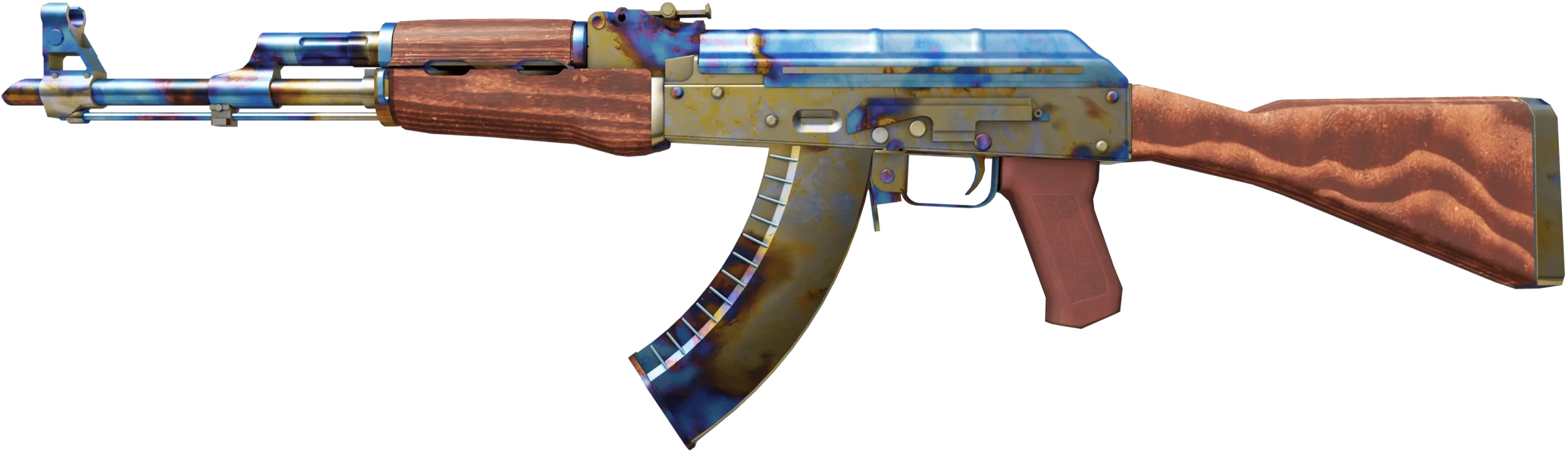
The entire difference between the $50 version and the $1,000,000 version is a single integer: the paint seed. This is the story of how one number out of 1,001 became the most valuable digit in gaming — and the math that decides which numbers matter.
Only the biggest game on Steam could do this
Before the math, the market. A collectible is only worth what a deep, liquid pool of buyers says it’s worth — a one-of-a-kind item in a dead game is worth nothing.
Counter-Strike has the opposite problem: it is the most-played game on Steam year after year, and the live Counter-Strike player count routinely clears a million concurrent players, more than the next several shooters combined.
Tens of millions of active players means millions of traded items, thousands of serious collectors, and enough market depth that a seven-figure private sale isn’t a stunt — it’s price discovery. Scale is what turns a lucky texture roll into an asset class.
One integer, 1,001 possibilities
Every time a Case Hardened item is created in Counter-Strike, the game rolls a paint seed — a fixed number from 0 to 1000 that determines exactly how the skin’s texture is wrapped onto the weapon model.
The Case Hardened texture is a mottled sheet of blue, purple, and gold metal, and for most seeds the result is an unremarkable patchwork of all three.
But a handful of seeds happen to align the texture so that blue covers almost everything you see. Collectors call these blue gems, and the community has mapped every one of the 1,001 possible patterns for every Case Hardened weapon — measured, quite literally, pixel by pixel.
Anatomy of a million-dollar pattern
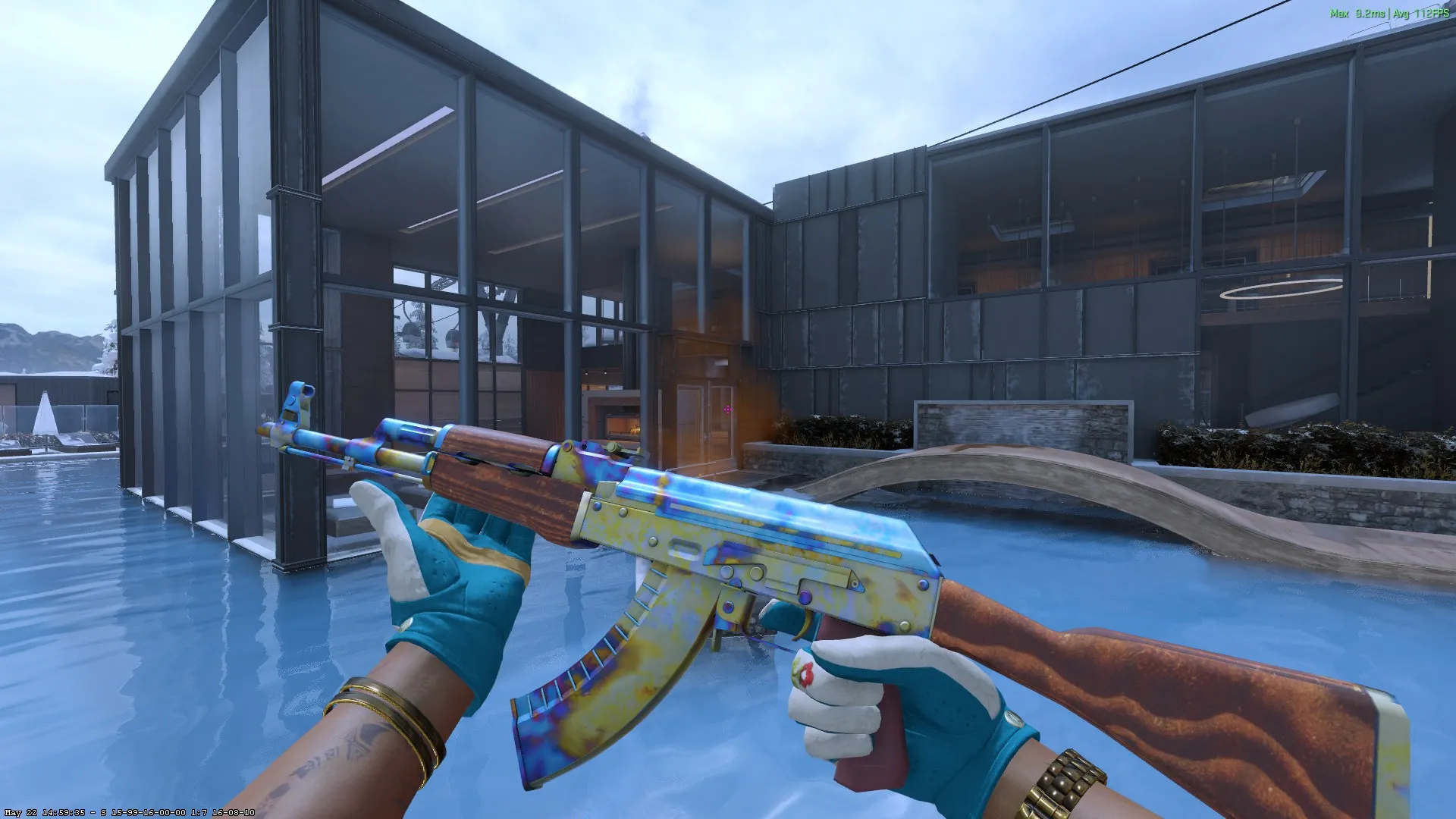
For the AK-47, the king is seed #661, known as “the Scar.” Pixel analysis puts its top surface — the receiver and magazine you actually see while holding the gun — at 97.6% blue, the closest any AK seed comes to a full-blue play side. The nickname comes from the one imperfection: a thin diagonal streak of gold cutting across the blue like a scar.
Rarity then stacks on rarity. Only around 149 examples of #661 exist across all wear conditions, and exactly one of them is both StatTrak and Factory New.
That one-of-a-kind specimen is the AK that sold in a world-record deal reported at over $1 million — even the buyer’s identity stayed confidential. Its lesser #661 siblings — higher float, no StatTrak — still trade in the tens of thousands.
The compounding odds
Could you just unbox one? The arithmetic is brutal. You’d need the case to drop the right item at its rarity odds, and then the seed roll to land on exactly the right number out of 1,001. Multiply the probabilities and a fresh, perfect #661 is a one-in-tens-of-millions event.
That’s why virtually every famous blue gem on the market wasn’t unboxed recently — it was found by collectors systematically scanning existing inventories for the magic numbers, some of them sitting unnoticed in accounts for a decade.
Not every weapon can go full blue
Here’s the detail most people miss: the texture wraps differently onto every weapon model, so each weapon has its own mathematical ceiling.
The Talon Knife can reach 97.8% blue. The M9 Bayonet — one of the most expensive knives in the game — tops out at just 86.6%, and no seed exists that can push it higher.
This is why serious collectors don’t rank blue gems by a fixed percentage threshold. A “Tier 1” pattern is a rank within its own weapon’s 1,001 possibilities, not a universal score — an 85% M9 is near-perfect while an 85% Talon is mid-table.
Some patterns earn fame for other quirks entirely, like Karambit #269, prized for being blue on both sides of the blade. Eyeballing a screenshot simply can’t tell you where a seed ranks; the pixel data can.
Check the number in your own inventory
If you own any Case Hardened item, the check takes seconds: read the paint seed from the item’s listing or inspect link, then enter it into a free CS2 blue gem checker, which returns the measured blue percentage for every side of your weapon and the seed’s rank among all 1,001 patterns — for every Case Hardened and Heat Treated item in the game.
Most seeds are duds. But people have found five-figure patterns in inventories they’d forgotten about, which is exactly why inventory-scanning became a cottage industry.
The broader lesson is pure economics: when supply is algorithmically fixed forever and demand scales with a playerbase counted in the millions, information is the only edge left. The pattern databases exist, the pixel measurements are public, and the tools are free.
Because somewhere out there, a $50 AK with a very good number is still sitting in an inventory whose owner has no idea what the integer means.
