
From Opening Loss to Champions: How Astralis Won Stake Ranked Episode 4 the Hard Way
By Alex╺
- PS4
- PS5
- XBox One
- Series X
- PC
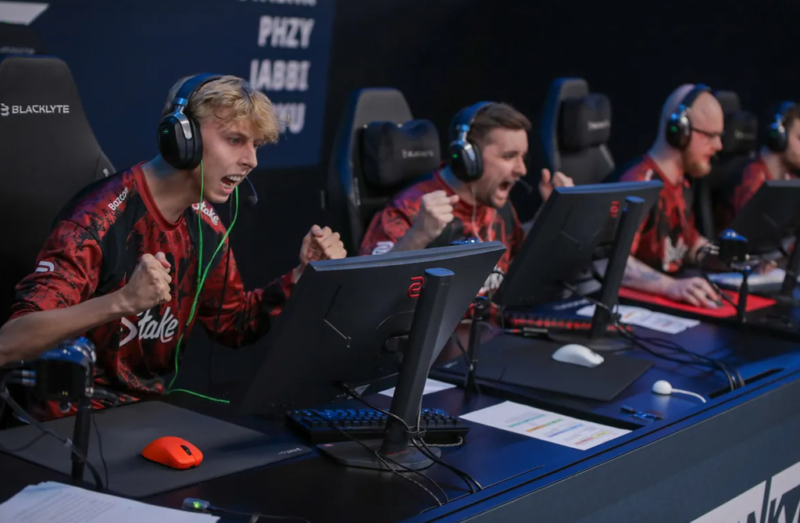
With another big Counter-Strike 2 event behind us, the most popular FPS esport delivered once again. Astralis arrived at Stake Ranked Episode 4 expecting a deep run.
Instead, their tournament began with a result that can derail an entire campaign. After losing their opening series to Alliance, the Danes were one defeat away from elimination. Four days later, they lifted the trophy in Barcelona and took home the $25,000 first-place prize.
That turnaround is exactly what makes their Episode 4 victory so compelling. It wasn’t a story of one superstar carrying the team through a difficult bracket, as is often the case, but a story of adaptation, composure, and increasingly effective teamwork.
Astralis had to win five consecutive elimination series, and they did, defeating FaZe, BIG, fnatic, Luminosity, and finally Nemiga in the final to complete one of the tournament’s most impressive recoveries.
Like the three episodes before it, Stake Ranked Episode 4 was an eight-team LAN event produced by StarLadder, with Stake and Astralis already partners and the online casino sportsbook serving as title sponsor.
Played from 1 to 4 October 2026 in Barcelona, the tournament used a double-elimination format, with every match played as a best-of-three, giving teams chances to recover from early setbacks. Astralis needed every one of them to win the quarter of the $100,000 total prize pool.
Opening Blow Against Alliance
The first warning came immediately. Astralis lost 1-2 to Alliance, who sent them into the lower bracket on day one. The details of the defeat made the result even more frustrating. On Inferno, Astralis built a 10-6 lead before Alliance fought back and eventually won 16-14.
Nuke followed a similarly lopsided opening pattern. Astralis led 9-5, only for Alliance to overturn the deficit and close the map 13-10.
Two maps, two leads surrendered, and suddenly the road to the title had become dramatically longer. In a conventional tournament, losing the opener can produce panic or even spell immediate doom.
For Astralis, it was the beginning of their real run and another great CS comeback story. With no more room for error, they had to navigate the lower bracket one series at a time.
FaZe Stood in the Way
Their first elimination opponent was FaZe, a team with considerable high-pressure Counter-Strike experience and another familiar face in Astralis’ story. Neo, the legendary Polish player Filip “NEO” Kubski, had left FaZe and became Astralis’ coach.
The tournament therefore offered an unusual subplot where the new coach would face his former team with elimination at stake. Astralis won 2-1.
The victory eliminated FaZe from the tournament, leaving NEO on the winning side of a matchup against the organization he had previously coached. It was a significant moment, but also a clear sign of what this Astralis lineup was becoming.
Rather than relying on one player to decide everything, they found different ways to win. The former FaZe coach had helped Astralis survive their first elimination series, and much more was to come.
BIG and Fnatic followed
The lower bracket challenge continued with BIG, and Astralis again won 2-1. At this stage, pressure became a defining feature of their entire quest. Every series was win-and-continue, or lose-and-go-home. They had no chance to reset after a poor performance or hide behind the possibility of another life in the bracket.
Astralis then faced fnatic and delivered their cleanest lower-bracket result yet, winning 2-0, a score that mattered as the team moved from surviving series to controlling them.
After the disappointment against Alliance, Astralis looked increasingly comfortable with the tournament’s demands, but the hardest part of the lower bracket journey was still ahead.
Luminosity as the Last Test
The consolidation final against Luminosity was a ticket to the championship match. Astralis needed another best-of-three victory, and once again they had to recover after dropping a map. Luminosity took Mirage 13-11, a close one, and put Astralis in another difficult position. They responded by winning Cache 13-7, then closed out Nuke 13-11.
The 2-1 victory completed the five-series comeback route and sent Astralis into the grand final. After their opening defeat to Alliance, they entered the lower bracket with one opponent between them and the title: Nemiga.
Nemiga Was Rightfully Confident
If Astralis represented the tournament’s great comeback, Nemiga represented consistency and dominance. Nemiga reached the grand final without losing a single map, an incredible performance.
Their route included victories over FaZe, Alliance and Luminosity, all 2-0 wins, meaning they had already beaten teams that Astralis had encountered during their own run.
Their broader form was just as intimidating. Nemiga won MPKBK CIS LAN Season 7 earlier in the month and had lost only once in their previous 15 series.
On paper, this was exactly the kind of opponent you would want to avoid after playing five consecutive elimination series, but Astralis had to beat them three times.
Astralis Take Control of the Grand Final
The final began on Mirage, and Astralis immediately showed their lower-bracket momentum hadn’t run out. They won 13-6, putting Nemiga on the back foot for the first time in the tournament.
However, Ancient responded as Nemiga took the map 13-10, leveling the series and showing why their unbeaten run had been so hard to break. At 1-1, the final became a test of who could adjust better.
Astralis answered with their strongest stretch of the match. They took Nuke 13-5 before closing out the championship on Cache with another strong showing: a 13-7 win. The final score was 3-1, and Astralis had completed a remarkable journey from their opening defeat to the tournament trophy.
Stars Took Turns Shining
One of the most interesting aspects of the final was how little the result depended on a single dominant carry performance. Victor “Staehr” Staehr posted the highest rating among Astralis players in the final: 1.41, with 66-49 K-D, 89.1 ADR, and 78.8% KAST. He was also the event’s highest-rated player, averaging 1.27 over the tournament.
Jakob “jabbi” Nygaard was almost as influential, posting a 1.37 rating in the final, a 65-46 K-D record and 97.3 ADR. His 2.30 rating on Mirage was particularly devastating and helped Astralis establish early control.
Then there was Gytis “ryu” Glušauskas, the final’s top fragger. Across the four maps, only 18 kills separated Astralis’ top and bottom fragger.
The team did not need one player to produce an extraordinary performance every round. Staehr, Jabbi, and ryu could take turns leading, while the rest of the lineup continued contributing.
NEO’s First Big Success With Astralis
NEO’s move from FaZe to Astralis had already created plenty of intrigue, but Episode 4’s circumstances made the transition particularly significant. His new team eliminated his former organization during its run, with FaZe finishing 7th-8th ($7,500).
For NEO, it was a symbolic success and proof that the new coaching relationship could produce results quickly. Astralis were forced to play five straight elimination series, recover from the collapse against Alliance and then defeat an unbeaten Nemiga in the final.
That requires more than mechanical skill. It takes preparation, communication and the ability to maintain a coherent game plan while the pressure keeps increasing. This was Astralis’ tournament, but also an early statement about what the team can build with NEO at the helm.
From Barcelona to the Major Race
Winning Stake Ranked Episode 4 doesn’t mean Astralis can relax and wait for the next major event. Their reward is a new position in the wider competitive picture. Astralis are now ranked No. 11, putting them in a position where their next challenge is qualification.
The PGL Major Singapore is the obvious target. To reach it, Astralis will have to navigate qualifiers and use the opportunities their new ranking provides.
The Barcelona victory therefore matters beyond the trophy itself and brings momentum at precisely the point when the calendar begins to demand more. Can the lessons from their comeback transfer to the next stage?
They showed they can recover from an early defeat, beat experienced opposition, and survive a run of elimination matches.
Most importantly, their success does not have to depend on one player being the hero every time. That could be a major advantage in the qualifier environment, where one bad series can be costly, and adaptability is often as valuable as raw firepower.
Stake Ranked Episode 5 Awaits
Astralis has little time to celebrate before another chapter begins. Stake Ranked Episode 5 is scheduled for 27-30 October, a true fall season special as the team returns to the StarLadder-produced series as defending champions.
The event will once again give teams a stage to compete in a concentrated Stake Ranked LAN finals environment, with a format designed to put preparation, tactical flexibility, and consistency under pressure.
For Astralis, Episode 5 will be different. They are no longer the team trying to recover from an unexpected opening loss, but the tournament’s most recent champions.
Opponents are likely to be more alert to what the lineup can produce. Their Barcelona run has also raised expectations, which makes the next event a fascinating test. Was Episode 4 the start of a genuine upward trend, or was the spectacular four-day run a fluke?
