
Why Some Casino Games Reshuffle the Deck After Every Hand
By Alex╺
- PS4
- PS5
- XBox One
- Series X
- PC
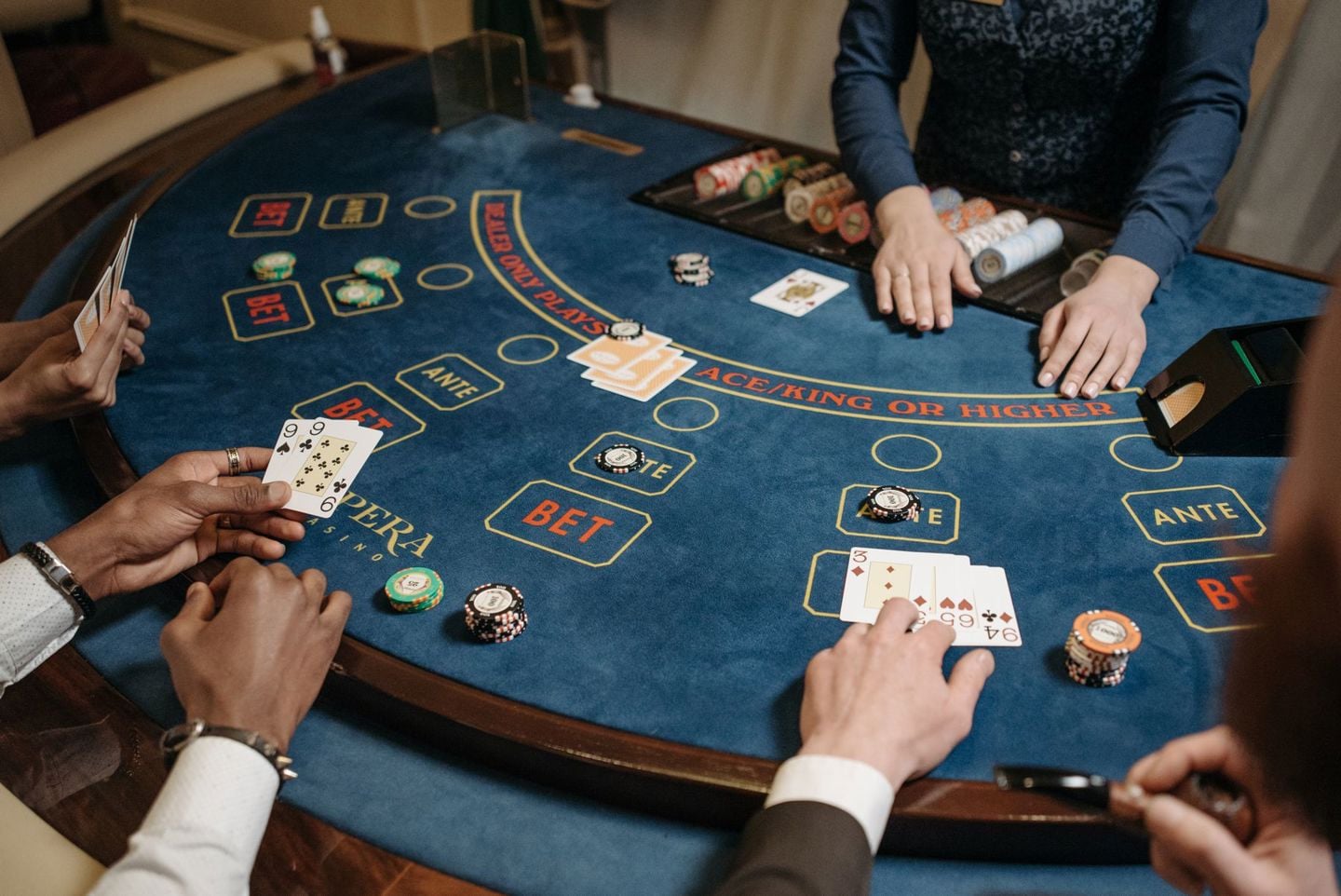
This week in Las Vegas, Light & Wonder has been showing MULTIDECK ULTRA, an update of its flagship card shuffler with AI card recognition and a true random number generator, at the G2E trade show running from 28 September to 1 October 2026, according to Light & Wonder’s G2E announcement.
That might sound a long way from your local casino floor. It’s closer than you’d think, because the company has traded solely on the ASX since leaving Nasdaq in November 2025, as Inside Asian Gaming reported.
So the box at the end of the blackjack table now has an ASX-listed name behind it.
That raises a good question. Why do some games keep feeding cards back into the mix instead of dealing a shoe down to the end?
You’ll come across both styles whether you sit down at a venue table or play online at spinbet au, where live games such as Classic Live Blackjack, One Blackjack and Infinite Blackjack are dealt from a real deck and the RNG versions simulate the deal on screen.
We’ll walk through why machines took over the shuffling, the small maths perk that comes with constant reshuffling, why the pace of the game counts for more than that perk, and why the rule card on the felt outranks all of it.
Everything here draws on peer-reviewed probability research, analysis from a respected table-games specialist and Australian press reporting, so you can check each point for yourself.
Shuffle Up and Deal: Why Machines Do the Mixing
Mixing cards properly takes more effort than most of us assume. Back in 1990, mathematicians Dave Bayer and Persi Diaconis showed that seven ordinary shuffles are enough to mix a single 52-card deck, and that going beyond seven adds very little. Diaconis advised nine shuffles for two decks and 12 for six, as The New York Times reported at the time.
Diaconis summed up how neatly the maths came together: “We were lucky that the formula fit the real problem. That is just miraculous, somehow.”
Now think about a six-deck shoe. Twelve proper shuffles, done by hand, while a full table waits. Table-games consultant Bill Zender has observed that a six-deck hand shuffle takes close to four minutes including transfer, while swapping in cards from a shuffling machine takes somewhere between 30 seconds and a minute, as he wrote in Global Gaming Business.
That gap explains a lot.
Machines come in two broad types. A batch (or multi-deck) shuffler mixes a whole shoe while the dealer plays from another one, so the game still runs down to a cut card.
A continuous shuffler takes used cards back in as play goes on, which keeps the mix topped up round after round. Light & Wonder’s catalogue lists both, including the ShuffleStar continuous shuffler and its MD3 and MDX multi-deck models.
Our take? The reshuffle is mostly good housekeeping. It keeps the cards moving and well mixed without the long pause a proper hand shuffle would need.
So the machine saves time. It can also save you a sliver of edge, and that’s the part most players never hear about.
The Small Perk Hiding in a Fresh Shuffle
Think of basic strategy as a map drawn for a full shoe. It tells you when to hit, stand, double or split, based on what a complete set of cards looks like.
The deeper a dealer goes into a shoe, the more the remaining cards drift away from what that map assumed. A continuous shuffler keeps returning cards to the mix, so the map stays closer to accurate.
Zender put numbers on this in the same Global Gaming Business analysis. In six-deck blackjack where the dealer hits soft 17, a basic-strategy player faces a house edge of 0.571% when the game is dealt to a cut card at around 75% penetration. With a continuous shuffler, that drops to 0.551%. The ideal case, with a full reshuffle after every round, sits at 0.548%.
His explanation is simple enough. As a shoe runs down, its make-up changes, so some basic strategy plays become a little less suited to the cards that are left.
There’s one detail to add, however. A continuous shuffler doesn’t hand you a brand-new deck every hand, because a few hands go by before used cards return to play. That’s why it sits a whisker above the ideal figure (0.003 of a point, to be exact).
Two hundredths of a percentage point is something you’ll never feel in a single evening. Still, it’s nice to know the machine at the end of the table isn’t tilting things further against you.
There’s a catch, though, and it has nothing to do with the odds on any single hand.
Faster Shuffles, Fuller Hours
Less waiting means more hands. According to a study by Persi Diaconis, Jason Fulman and Susan Holmes, mathematicians at Stanford and USC, published in The Annals of Applied Probability in 2013, shuffling machines produce approximately 20% more hands per hour than dealer shuffling. That speed is one of the main reasons casinos use them.
Table size plays a big part too. The figures below come from Jim Kilby’s textbook Casino Operations Management, as reproduced in a KX technical paper.
| Players at the table | Average hands per hour |
| 1 | 209 |
| 2 | 139 |
| 3 | 105 |
| 4 | 84 |
| 5 | 70 |
| 6 | 60 |
| 7 | 52 |
You can see how quickly things speed up as seats empty. A table with one player deals about four times as many hands as a full one.
Here’s how that plays out with a $10 bet at the five-player pace. A game dealt to a cut card, at the house edge from the previous section, costs you about $4.00 an hour on average.
Add 20% more hands with a continuous shuffler and the hourly cost comes to about $4.63, even with that slightly lower edge. This is a rough illustration built from different studies and rule sets, so treat it as a guide, not a forecast.
PlayerCounter’s piece on how casino games are giving players more decisions without rewriting the core rules makes a similar point about online games: the settings you pick shape the pace of a session, while the maths underneath stays put.
The good news is that a quicker game gives you more action for your time, so it pays to plan for it. If you play online, SpinBet’s Limits section lets you set deposit, loss and wager limits by the day, week or month, and lowering a limit takes effect straight away. For time, a simple timer on your phone does the job nicely.
If you planned your next session in hands rather than minutes, would you still pick the fastest table in the room?
Pace is one lever. The bigger one is printed on the table itself.
Read the Rule Card Before the Reshuffle
In Australia, table rules have moved the numbers far more than shuffling ever has. In 2012, The Age reported on Blackjack Plus, which Crown Melbourne ran on all its low-bet tables.
In that game, a dealer total of 22 was a stand-off, and a blackjack paid 3:2. It returned between 97.14% and 97.17% to players, depending on the number of decks. The original Crown Blackjack, which paid 6:5 on a blackjack, returned 99.66%.
That’s a gap of about 2.5 percentage points, or roughly 125 times the shuffler perk we covered earlier.
It also shows that one appealing rule doesn’t settle the question. The better-sounding 3:2 payout didn’t make Blackjack Plus the better-value game; the full set of rules decided that. Those figures are from 2012 and rules change over time, so the sign at the table you’re sitting at is always the one to go by.
A quick rule-card check before you sit down:
- What does a blackjack pay?
- What happens when the dealer makes 22?
- Does the dealer hit or stand on soft 17?
- How many seats are filled? (A busier table moves more slowly.)
The same habit works on screen. SpinBet’s blackjack guide suggests practising with free games first, which is a sensible way to learn a rule set before any money goes down.
Its range shows how much variety there is: European Blackjack lets you split only once and double down only on certain totals, while Double Exposure Blackjack reveals both of the dealer’s cards from the start.
You can see the reshuffle happening, but the rule card decides your numbers. Enjoy watching the first and take a minute to read the second.
Put those ideas together and a clear, simple playbook appears.
Fresh Deck, Clear Plan
Machines took over the mixing because proper hand shuffling is slow. The constant reshuffle hands you a tiny maths perk, while faster dealing and the table’s rules decide where your time and money go. So the best response to a game that never stops reshuffling is a session you’ve planned before the first card lands.
The science of shuffling keeps getting sharper, too. In their 2013 paper, Diaconis and his colleagues found that one pass through a new 10-shelf shuffler let a knowledgeable player guess about 9.3 cards correctly from a 52-card deck, against about 4.5 for a well-mixed one.
The manufacturer adopted their fix of running the cards through twice. Research is still going this year, with a 2026 paper in the UNLV Gaming Research & Review Journal modelling the wash shuffle used in poker rooms.
Closer to home, Light & Wonder described Australia and New Zealand as an important market when it brought its table games to the Australasian Gaming Expo in Sydney this August.
If you like to play from home, SpinBet’s lobby of more than 5,000 games from over 20 providers keeps its live tables open 24/7. That makes it easy to compare live and digital blackjack and run your rule-card check before choosing where to sit.
Your plan can stay simple: check the rules, count the seats and set a budget and a timer before you play.
Please play for fun and within your limits. If you’d like free, confidential support at any time of day, Gambling Help Online is available 24/7 on 1800 858 858.
